Track Maintenance
Protecting Railway Safety and Ensuring a Comfortable Ride
Supporting People’s Mobility and
Society with Craftsmanship Refined to the Millimeter
Every time a train travels along the tracks, the resulting load creates distortions that can compromise safety and passenger comfort. We continuously inspect the condition of the tracks and perform repairs with millimeter-level precision.
As a comprehensive track engineering team, RAILTEC ensures safe and comfortable train operations by properly inspecting and maintaining the tracks to keep them in optimal condition at all times.
As a comprehensive track engineering team, RAILTEC ensures safe and comfortable train operations by properly inspecting and maintaining the tracks to keep them in optimal condition at all times.
Track Inspection Using Specialized Vehicles
Railway lines are long, and it’s impossible to predict exactly where a problem might occur.
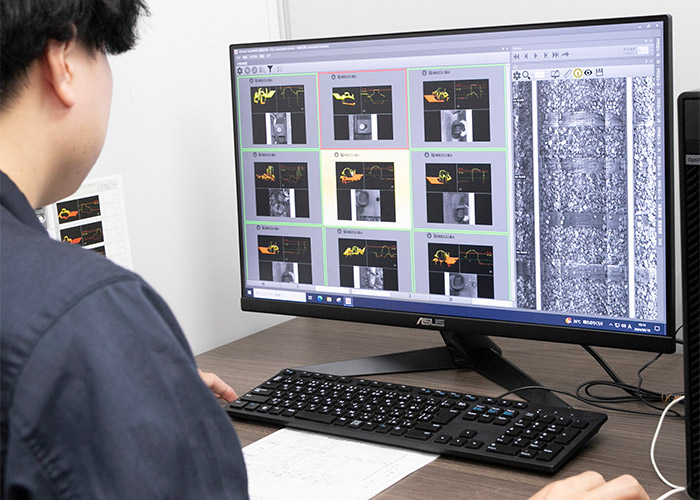
We use specialized inspection vehicles to quickly detect abnormalities in the railway tracks while actually traveling along them. Based on the data collected during these inspections, we conduct detailed examinations and maintenance to ensure the tracks are properly maintained.
We use specialized inspection vehicles to quickly detect abnormalities in the railway tracks while actually traveling along them. Based on the data collected during these inspections, we conduct detailed examinations and maintenance to ensure the tracks are properly maintained.
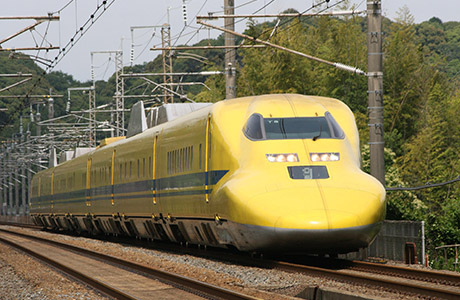
Shinkansen Comprehensive Track and Overhead Line Inspection Train
This Shinkansen test train is affectionately known as Doctor Yellow. Every 10 days, it completes a round trip on the Tokaido and Sanyo Shinkansen lines between Tokyo and Hakata. Traveling at speeds of up to 270 km/h, the train inspects track conditions to ensure the safe operation of high-speed Shinkansen trains.
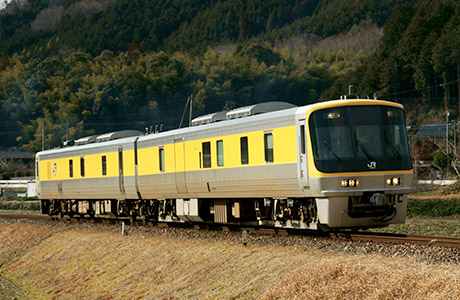
Conventional Line Comprehensive Inspection Train
This KiYa train is used to inspect the condition of conventional lines, whether electrified or not, at speeds close to those of regular trains. While conducting inspections, it also captures images of the rails, sleepers, and other components to check for any abnormalities.
Track Inspection
We assess track conditions using specialized track inspection vehicles and measuring instruments to check for signs of rail defects or distortions.
Even small cracks developing inside the rails cannot be overlooked. We use equipment such as ultrasonic search trolleys to accurately identify abnormalities and prevent potential accidents before they occur, ensuring the safe operation of trains.
Even small cracks developing inside the rails cannot be overlooked. We use equipment such as ultrasonic search trolleys to accurately identify abnormalities and prevent potential accidents before they occur, ensuring the safe operation of trains.
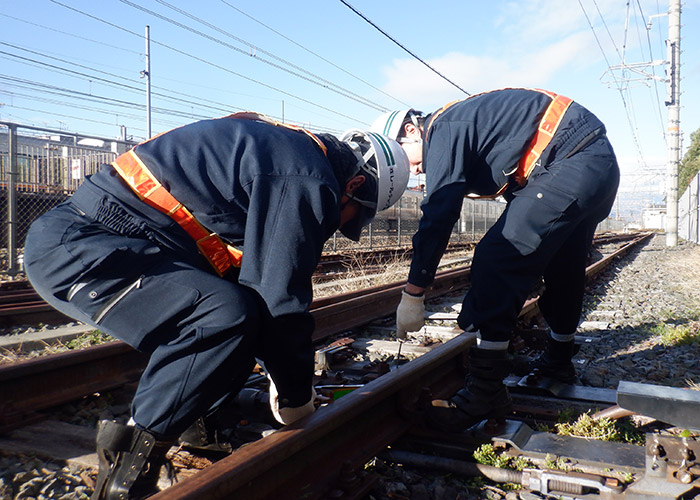
Turnout Inspection
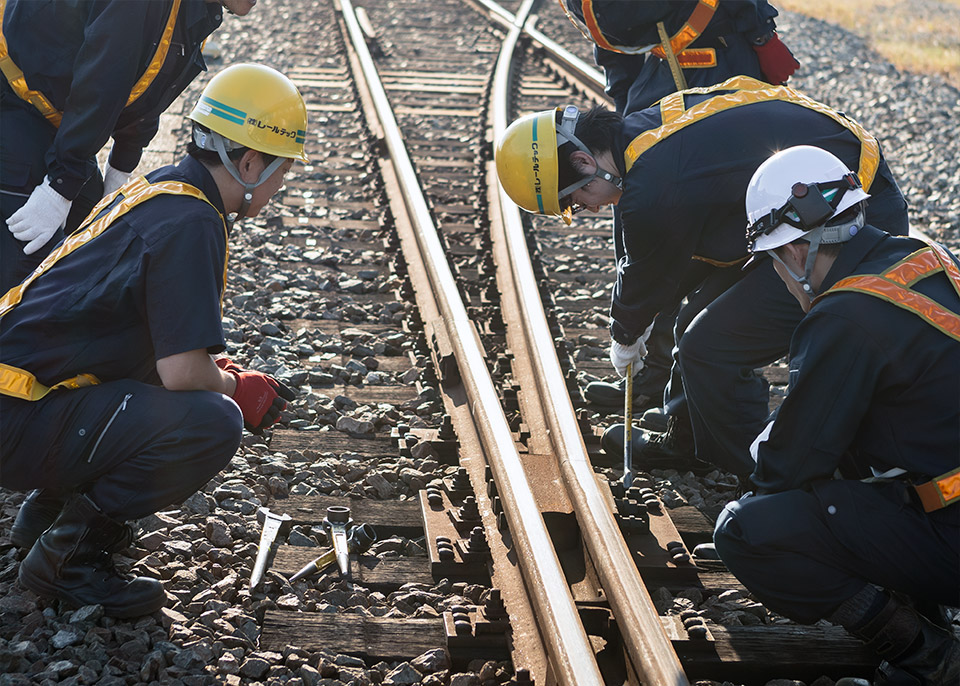
Turnouts are the only devices capable of changing a train’s route. However, they also represent weak points in the track structure.
We dismantle sections that cannot be inspected by rail flaw detection trains to check for defects and assess the extent of component wear. Then, we determine the integrity of the dismantled sections by performing non-destructive testing, such as penetrant testing.
We dismantle sections that cannot be inspected by rail flaw detection trains to check for defects and assess the extent of component wear. Then, we determine the integrity of the dismantled sections by performing non-destructive testing, such as penetrant testing.
Track Alignment Inspection and General Inspection
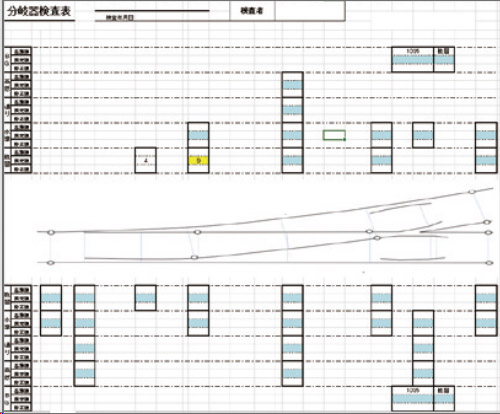
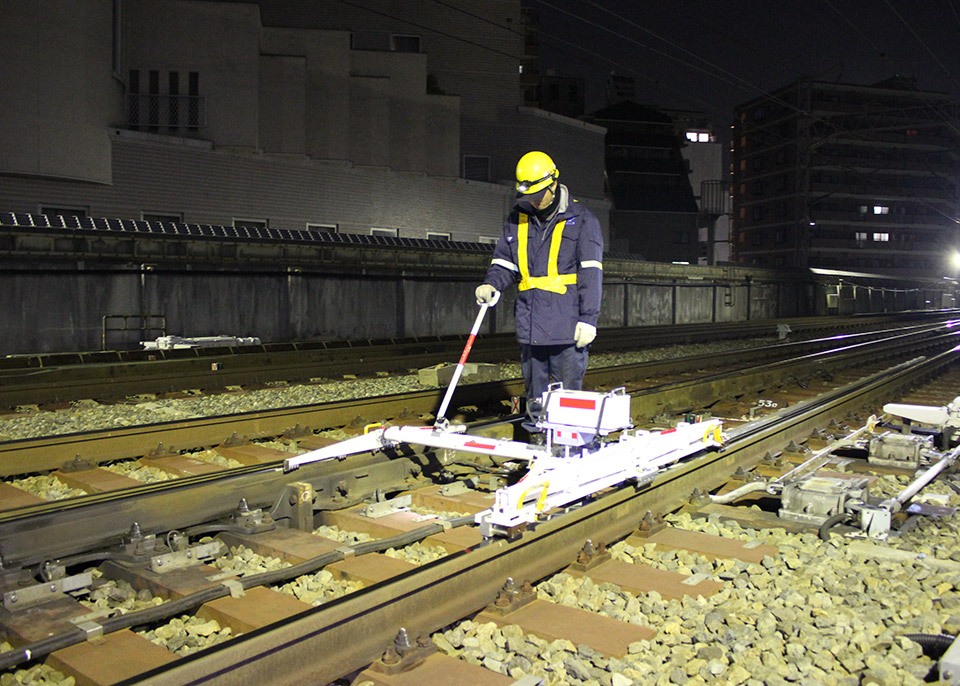
We use a simplified track inspection device to measure vertical and lateral deviations that are not detected by track inspection vehicles.
We also periodically inspect the wear condition of turnouts, which consist of rails with complex cross-sectional shapes, to monitor wear progression.
We also periodically inspect the wear condition of turnouts, which consist of rails with complex cross-sectional shapes, to monitor wear progression.
Track Maintenance Using Heavy Equipment
To restore tracks to their proper condition, we use high-performance heavy machinery, such as Tamping Machine and rail reprofiling vehicles.
Since this work is usually performed late at night, passengers rarely see it. However, carrying out these tasks regularly helps ensure a safe and comfortable ride.
Since this work is usually performed late at night, passengers rarely see it. However, carrying out these tasks regularly helps ensure a safe and comfortable ride.
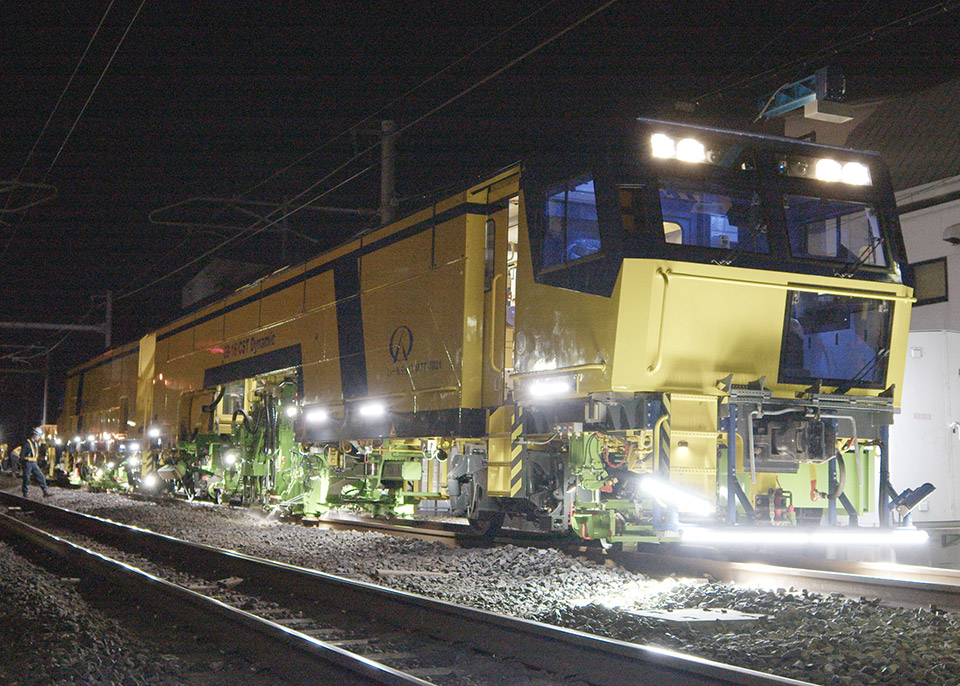
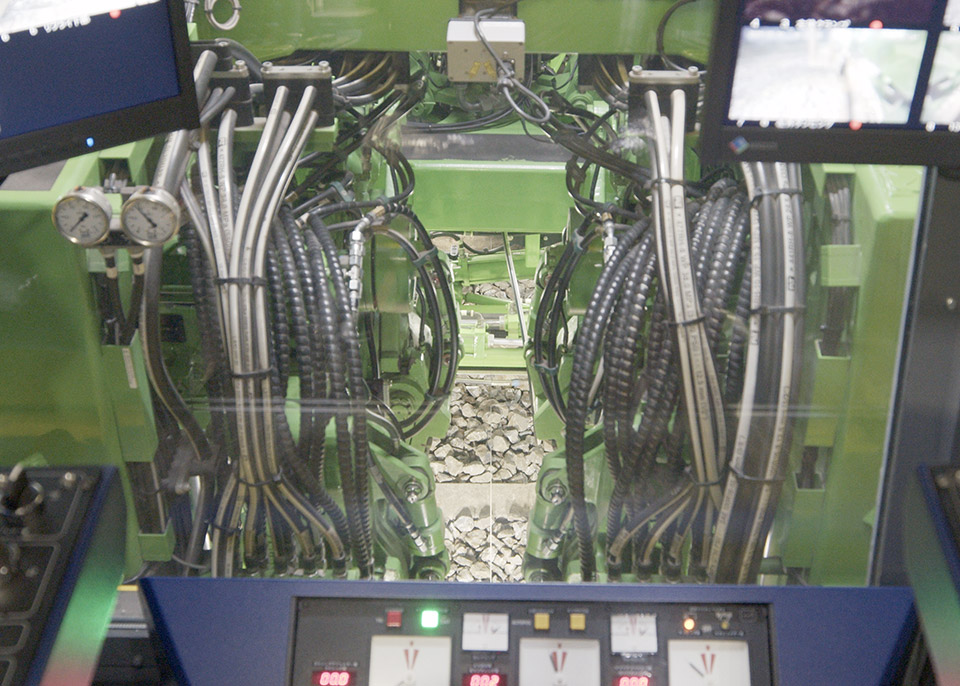
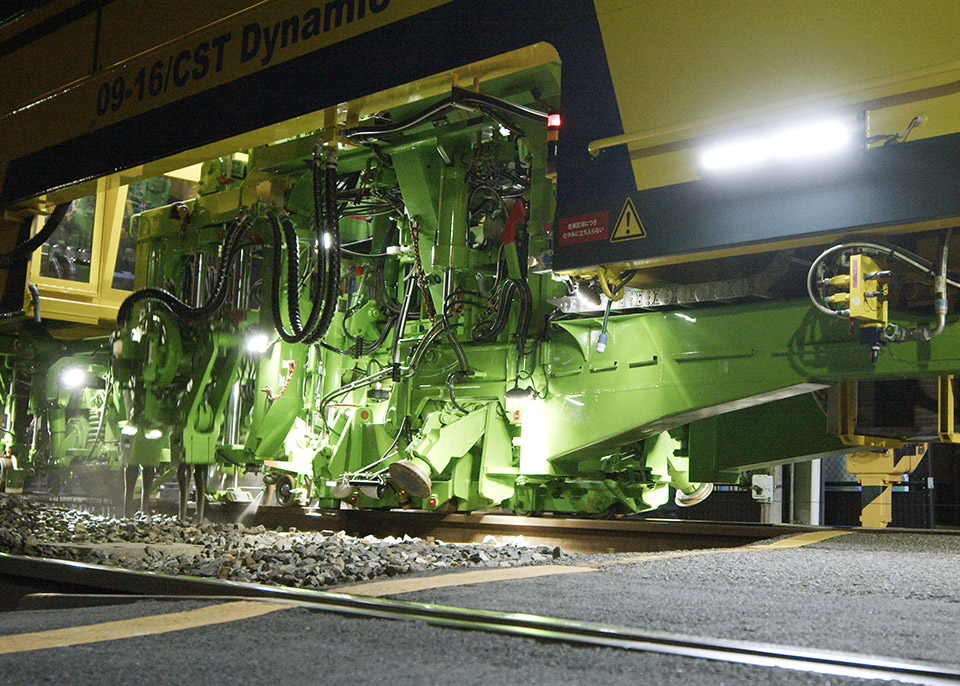
Tamping Machine
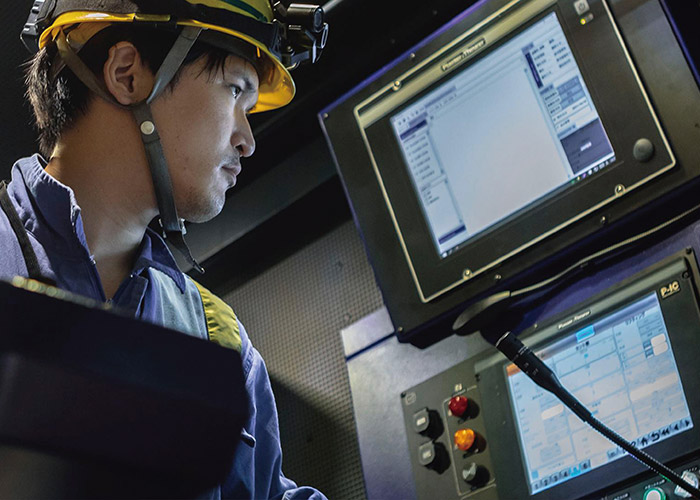
This large machine corrects track irregularities. It grips the underside of the rail, lifts the track, and lowers a vibrating tamping tool beneath the sleepers and then compacting the ballast there. A tamping machine can also be used for maintenance work to prevent derailments. Compared to manual labor, it perform tasks faster and with greater precision and efficiency, thereby improving riding comfort. Operating a tamping machine requires a high level of skill.
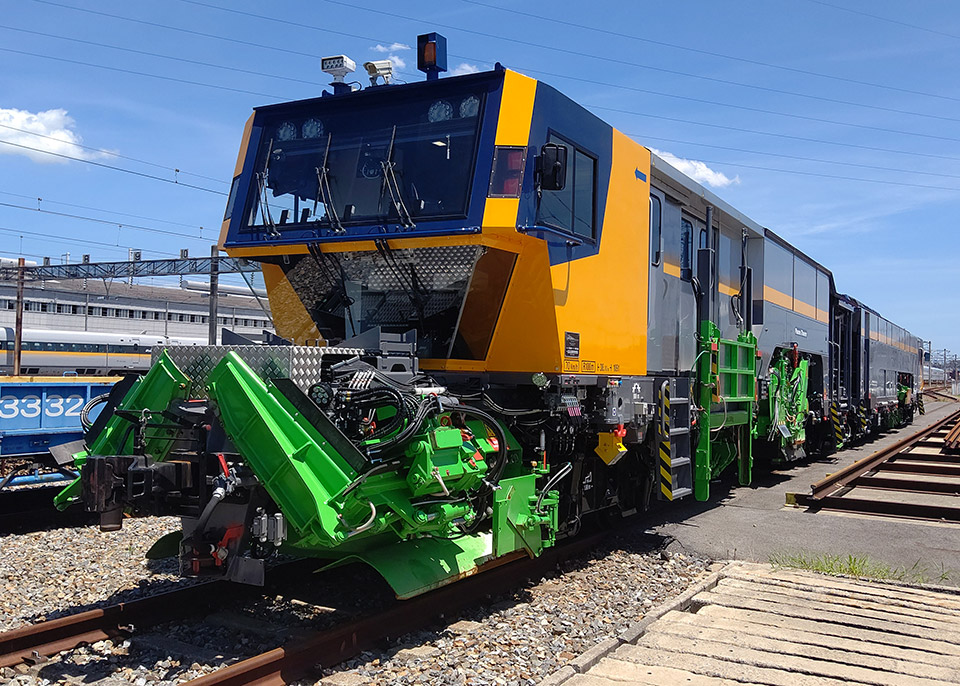
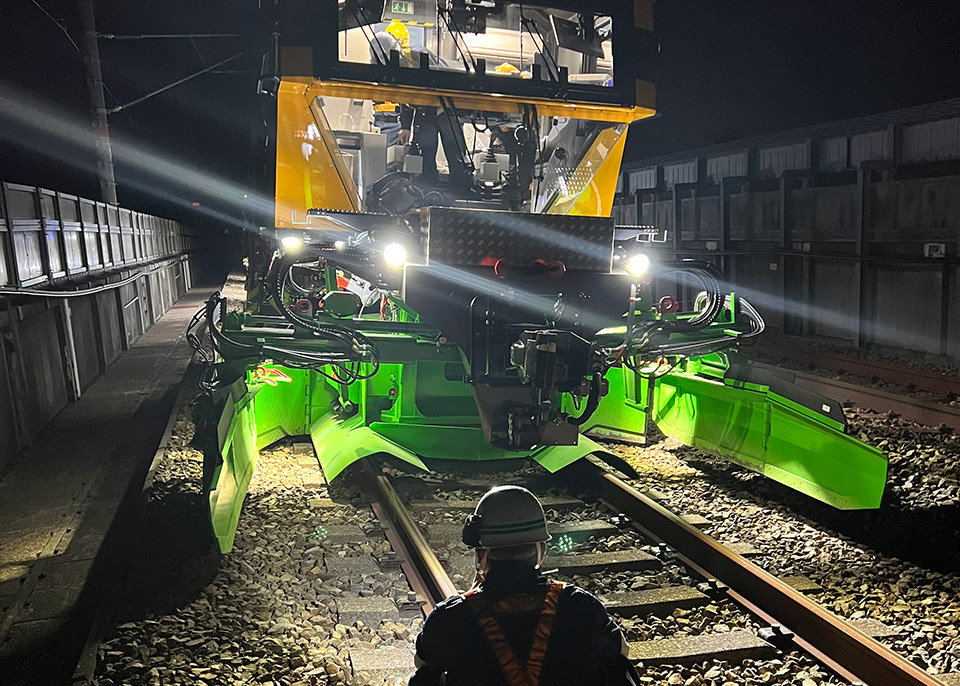
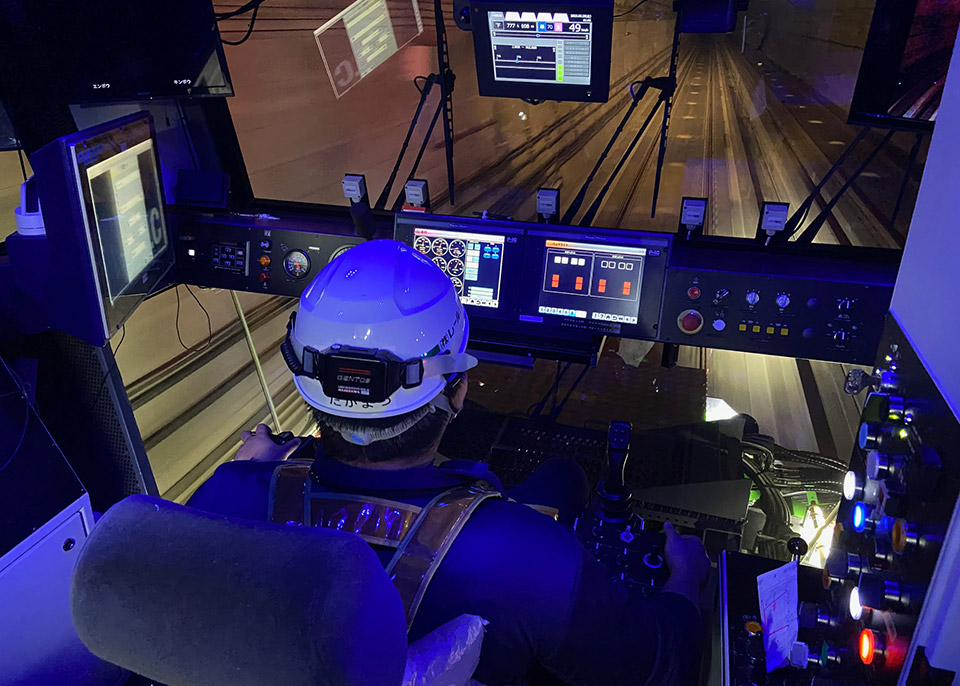
Combined Ballast Regulating and Track Stabilizing Machine (SFM-C)
By vibrating the ballast, this machine reduces the gaps between ballast stones, accelerates initial settlement following tamping with a tamping machine, and rapidly stabilizes the ballast bed. This enables smooth train operations without significant reductions in train speed, even on the day after ballast replacement work. Furthermore, as its name suggests, this large machine can simultaneously perform ballast profiling.
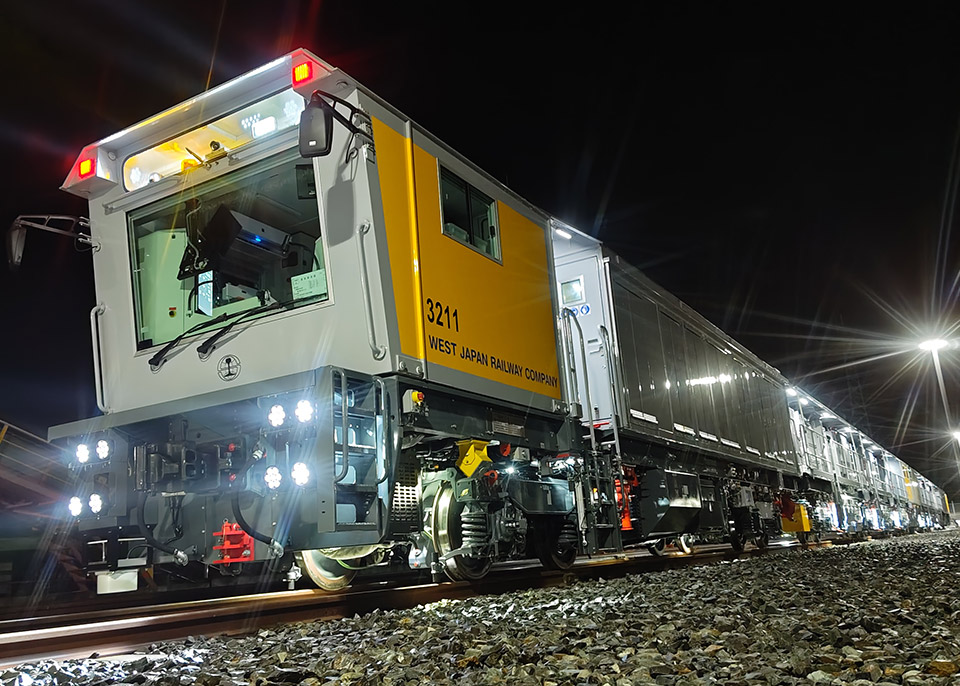
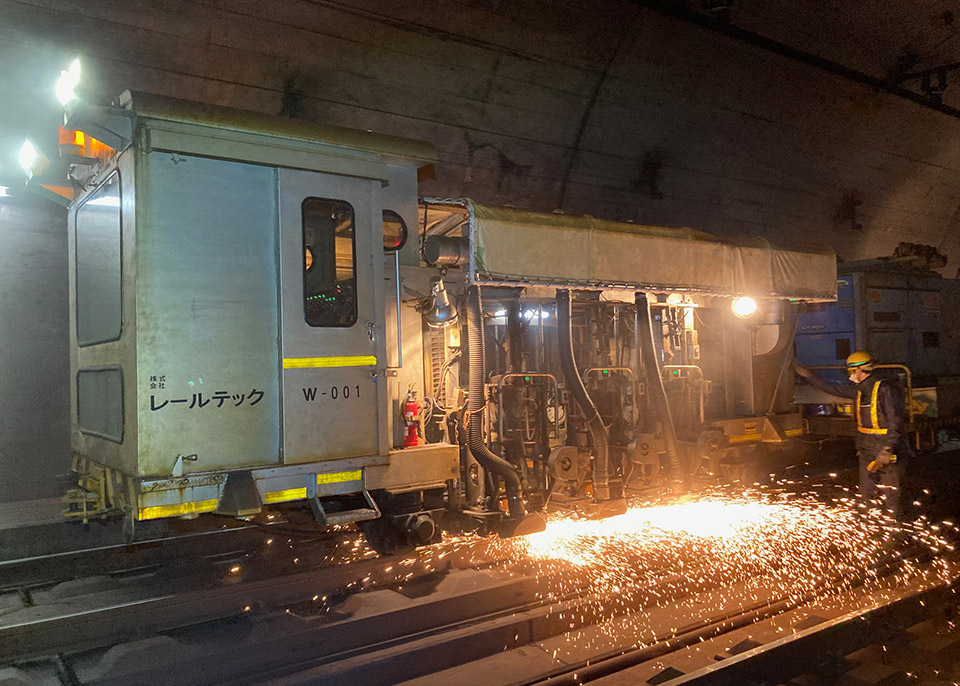
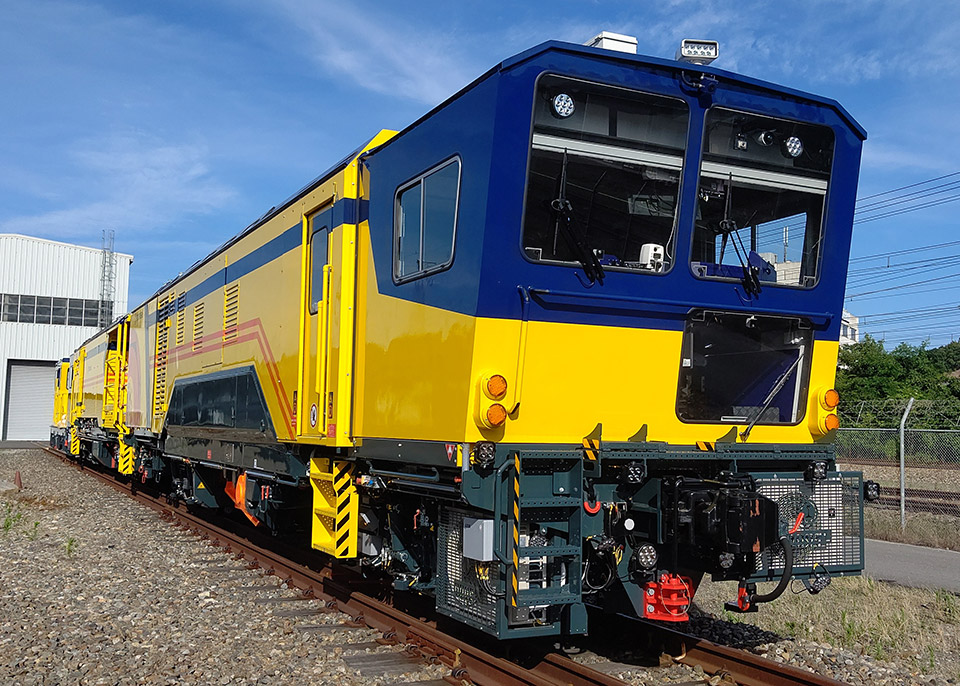
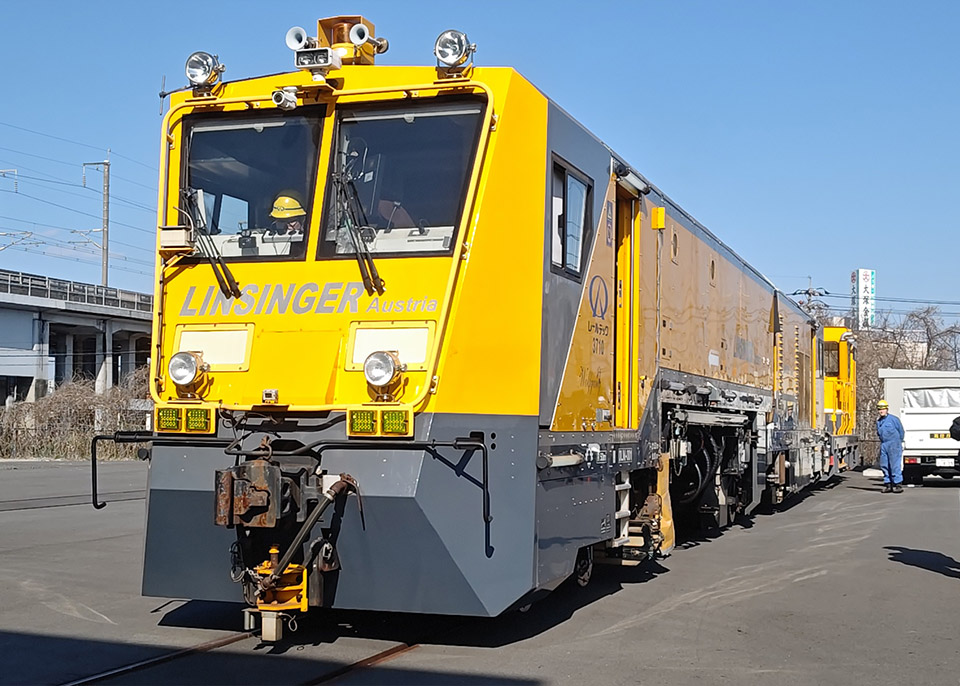
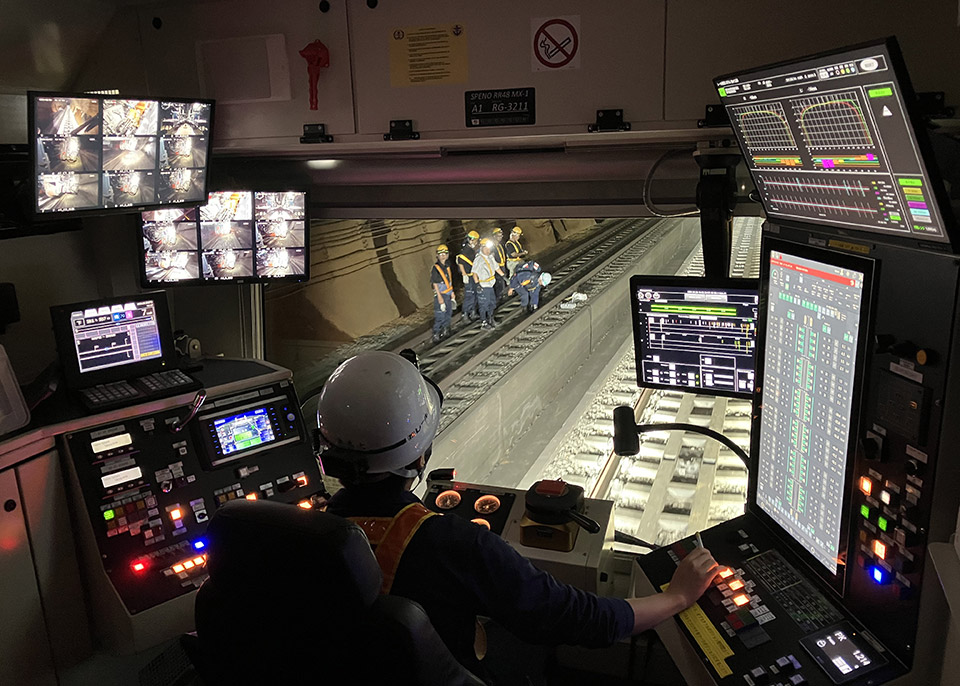
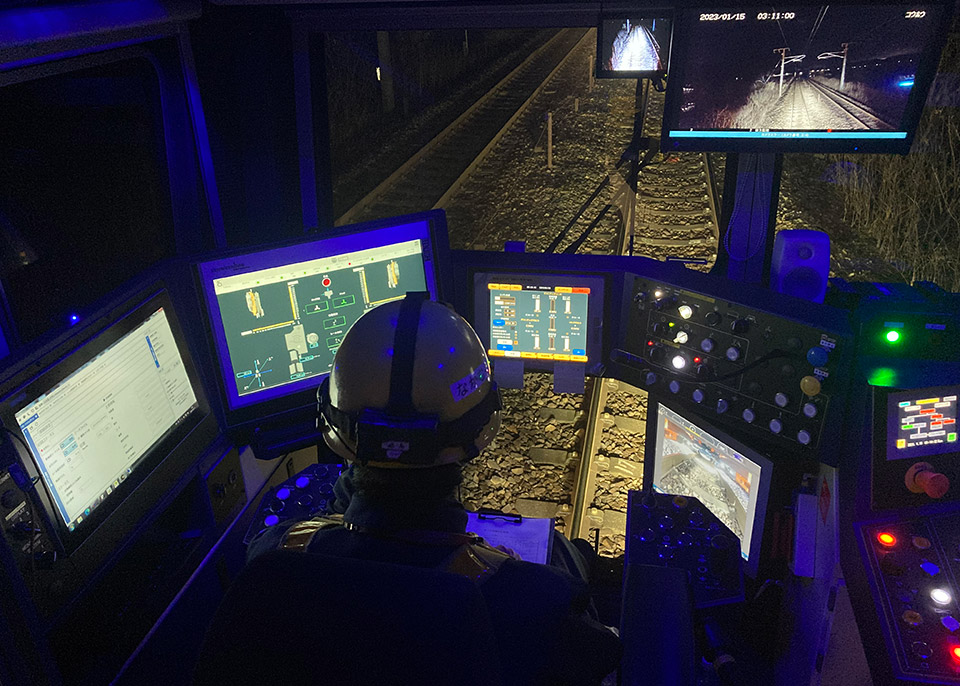
Rail Reprofiling Vehicle
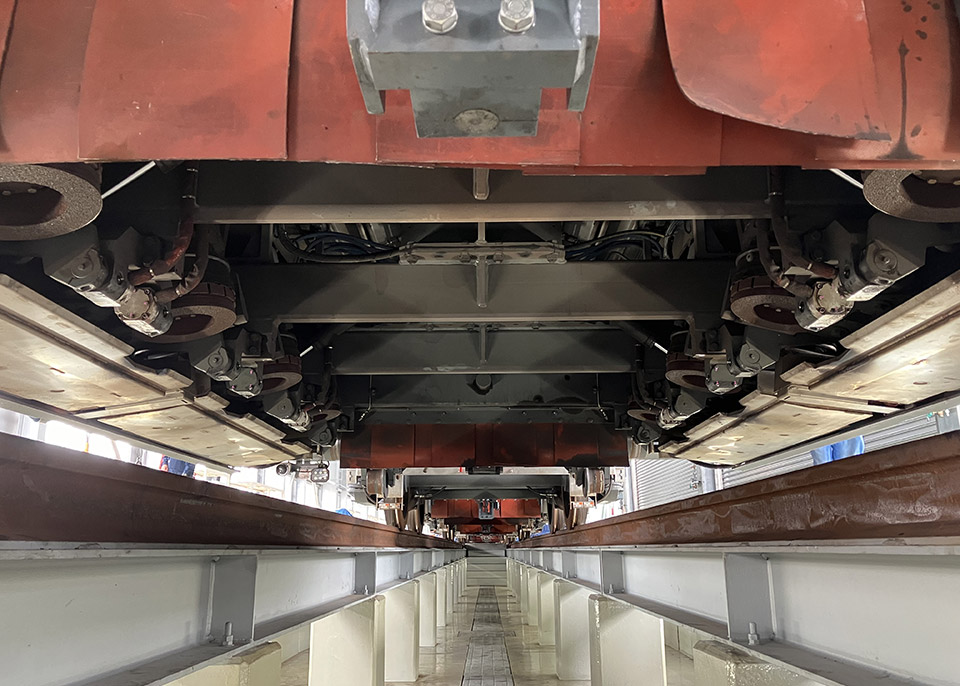
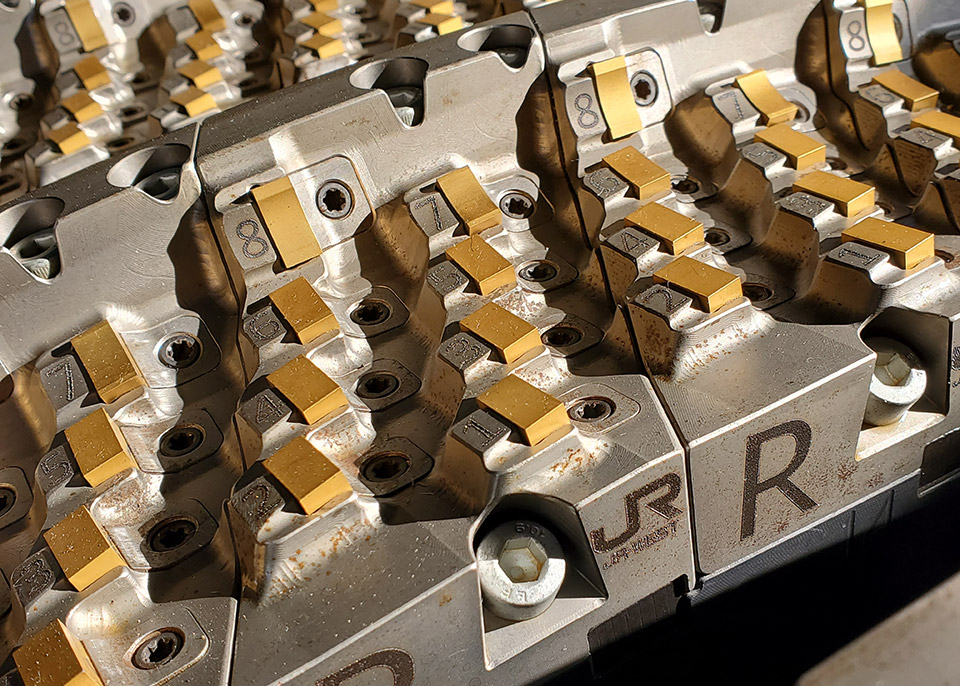
This large machine removes the minute irregularities from the surface of rails in order to make them smooth. Grinding the rail surface with a tolerance of 1/100 mm or less helps reduce noise and vibration. This process can also correct the cross-sectional shape of the rail, thereby extending its service life and suppressing the progression of scuff marks. Depending on the machine, there are two methods: grinding, which uses a grinding wheel to smooth the surface, and milling, which grinds the rail like a plane.
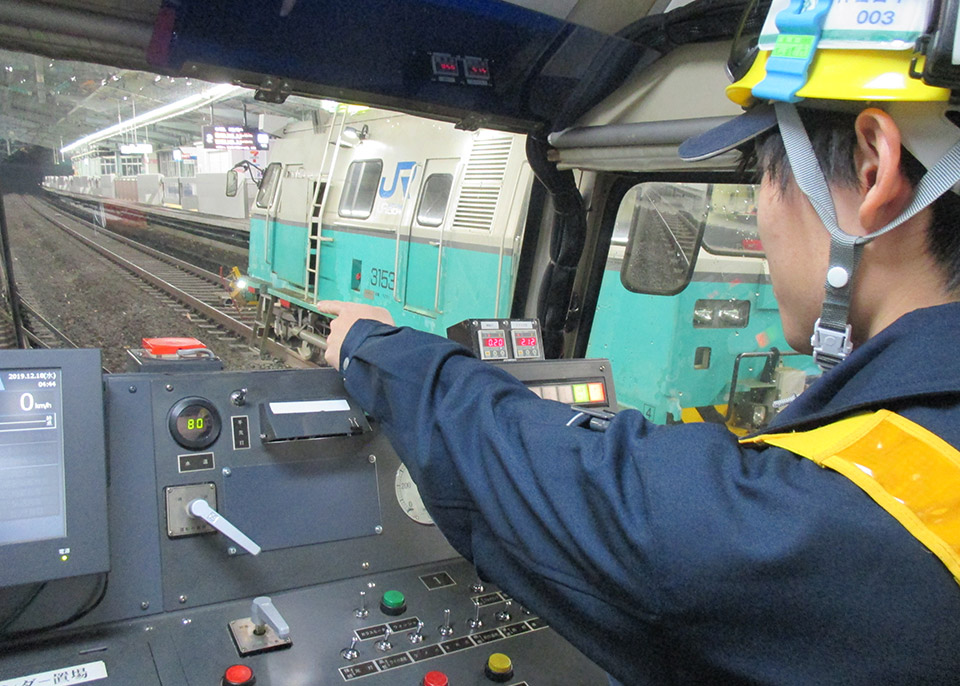
Track Inspection Vehicle
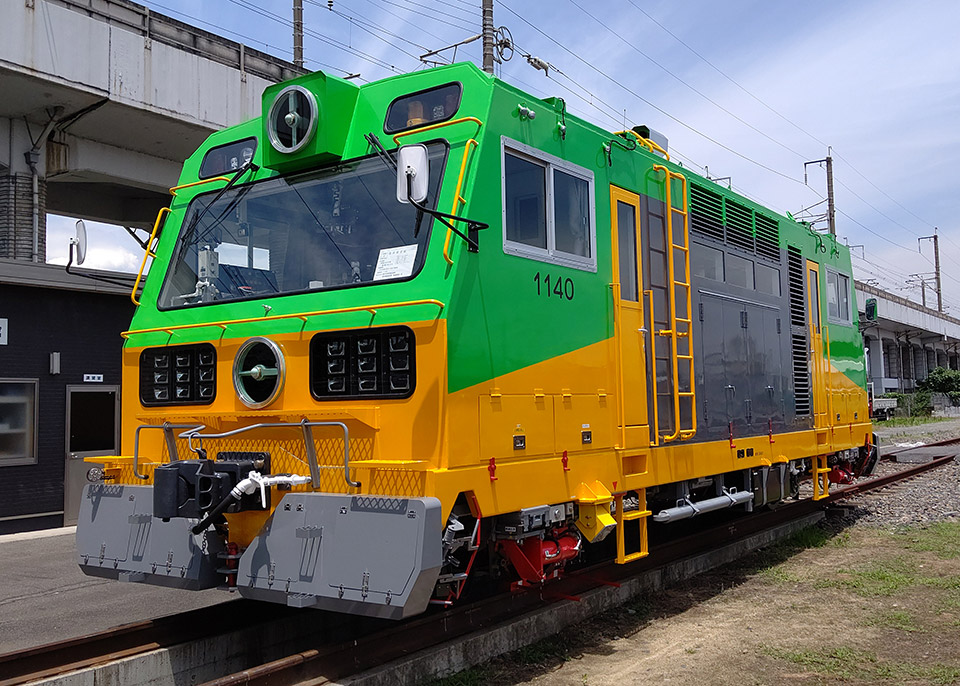
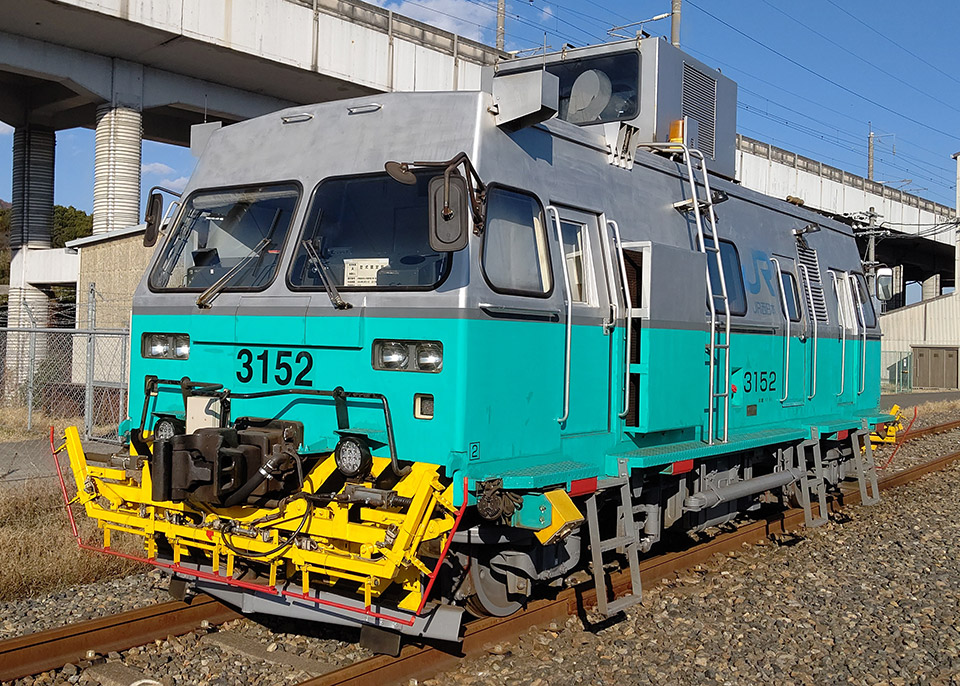
After nighttime maintenance work on the Shinkansen finishes and before the first trains of the day begin operating, this vehicle travels along the tracks to perform a final inspection. Equipped with a clearance obstruction detection system beneath the undercarriage, it can detect obstacles within the structural clearance while in motion. Track inspection vehicles with forward-looking surveillance systems can travel at speeds of up to 110 km/h. The daily operation of these vehicles ensures a safe start to the Shinkansen’s service day.
Welding Technology Center
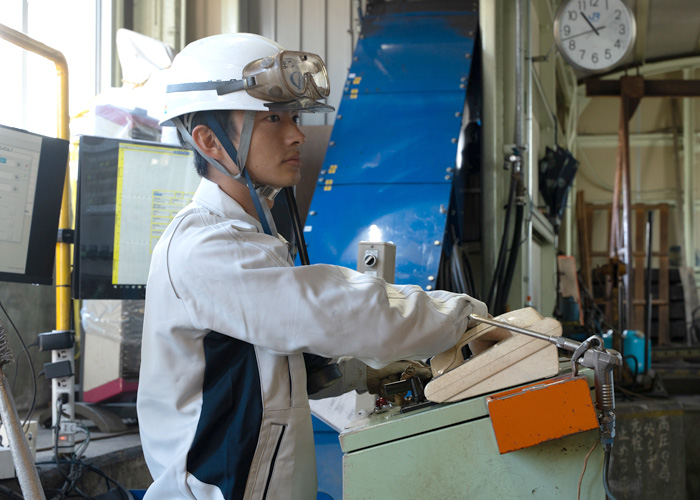
The Welding Center, located in Mukomachi along the JR Kyoto Line, manufactures long rails and operates flash butt welding machines and related equipment.
Welded rails help to provide safe, comfortable tracks with few joints, ensuring a smooth ride.
About the Welding Technology Center
Welded rails help to provide safe, comfortable tracks with few joints, ensuring a smooth ride.
About the Welding Technology Center
We protect more than just rails.
We safeguard the connections they create, the society they support, and the future they help build.
We safeguard the connections they create, the society they support, and the future they help build.